Can Ireland be trusted to get EU’s new nicotine rules right?
As Ireland takes over the rotating EU presidency, negotiators in Brussels continue wrangling over proposed revisions to the Tobacco Products Directive. What can Ireland’s own experience with tobacco control tell us about what to expect over the next six months?
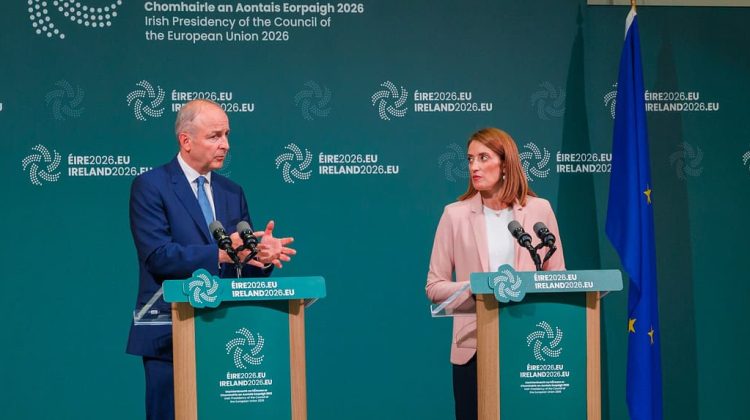
On July 1st, Ireland assumed the rotating Presidency of the Council of the European Union. It does so at a crucial moment for nicotine and tobacco policy, with the EU continuing work on how to update rules and taxes covering tobacco and nicotine products.
Cyprus, which held the presidency in the first half of 2026, worked to craft a compromise proposal on new excise duties, only to see Sweden veto the latest revision of the Tobacco Excise Directive (TED) in early June.
Ireland: tobacco control pioneer
Ireland, meanwhile, assumes the presidency with a reputation as a tobacco control pioneer, being the first European country to ban the sale of oral tobacco products back in 1988.
In 2004, it became the first country in the world to introduce a comprehensive national smoking ban in enclosed workplaces, including pubs and restaurants. It has also introduced advertising restrictions, plain packaging, high tobacco taxes, and a “tobacco-free” target.
Initially, Ireland’s strong arsenal of tobacco control measures had a marked effect. The adult smoking rate has fallen from around one-third in the late 1990s to below 20 percent.
A stubborn plateau
But in recent years, the drop in smoking prevalence has stalled. In 2024, 17 percent of the population identified themselves as smokers, with 14 percent consisting of daily smokers.
Ireland’s smoking rate has dropped below the current EU average of 24 percent. However, it remains well above that of Sweden, which has now reached smoke-free status with a daily smoking prevalence under 5 percent.
“Ireland presents an interesting comparison to Sweden, as both countries were ahead of many EU peers when it came to implementing tough tobacco control measures,” says Patrik Strömer, Secretary General of the Association of Swedish Snus Manufacturers.
“It’s clear that restrictions on smoking in workplaces and public spaces make a difference. But that doesn’t explain the huge gap in the results seen in Ireland versus Sweden.”
Despite a strong arsenal of tobacco control measures deployed in both countries, only Sweden has achieved smoke-free status.
The alternative Ireland never had
Sweden also introduced tougher smoking rules, tax increases, advertising restrictions, and smoke-free environments. But Sweden also combined those rules with access to less harmful alternatives – first traditional snus, and later nicotine pouches.
“As restrictions made it harder and harder to smoke in Sweden, consumers had a readily available smoke-free alternative: snus,” says Strömer.
“Sweden didn’t become smoke-free through bans or by forcing people to quit nicotine. We became smoke-free because as the country tightened the rules for smoking, Swedes had ready access to a nicotine alternative that was less harmful to themselves and less disruptive for others.”
Eradicate, not regulate
Yet Sweden’s success has received a lukewarm reception in Brussels. And with Ireland in a position to have greater influence over EU tobacco and nicotine policies, Strömer is concerned the island nation may join the chorus calling for nicotine bans rather than those embracing harm reduction.
For example, Ireland’s Health Minister Jennifer Carroll MacNeill has said work is underway to “eradicate” nicotine pouches, calling them “particularly invidious”.
She has also said Ireland wants the revised Tobacco Products Directive brought forward as soon as possible, arguing that new nicotine products such as vapes and pouches require EU-level action.
Protecting young people matters. No serious harm reduction advocate argues that nicotine products should be marketed to children.
The second half of the lesson
“Ireland deserves credit for being early and brave on smoking bans,” says Strömer.
“But the question now is whether Ireland has learned the second half of the lesson. Restrictions can reduce smoking, but alternatives are what allow smoking rates to collapse.”
He points out that Sweden’s regulations on smoke-free alternatives include age limits, health warnings, ingredient requirements, and product regulation. But adds there is a “major difference” between regulating adult access and trying to eliminate the very products that help smokers move away from cigarettes.
“It’s like forcing people to either drive 100km/hr on a crowded city street or not at all rather than implementing a 30km/hr speed limit,” he says.
“The former option is deadly or impractical; the latter option allows people to drive – but in a way that is less harmful to themselves and others.”
This is where the Ireland-Sweden comparison becomes so compelling.
Ireland shows what conventional tobacco control can achieve: a large decline, followed by a stubborn plateau.
Sweden, meanwhile, shows what happens when smokers are also given a realistic substitute.
A directive that will outlast Ireland’s presidency
The substitution effect seen in Sweden is coming increasingly hard to ignore, says Strömer.
“When given a choice, people are ready to switch from cigarettes to less harmful alternatives,” he says.
That should matter for the EU’s next tobacco rules. The Tobacco Products Directive revision, often called TPD3, will shape nicotine policy for years.
New rules inspired by harm reduction thinking could clearly distinguish between combustible cigarettes and less harmful smoke-free alternatives.
But a TPD3 informed by thinking like that of Ireland’s health minister risks extending the same thinking that has kept snus banned across the EU for more than three decades and depriving Europeans of yet another less harmful alternative: nicotine pouches.
Strömer warns the stakes are “extremely high” and that “regulation should reflect risk”.
That principle may sound obvious to many. Yet in much of Europe, policy still treats nicotine use itself as the main enemy, rather than focusing on the far greater harm caused by smoking.
Mistaking prohibition for ambition
Ireland’s presidency will therefore be a test. Will Dublin use its role to pursue a prohibitionist agenda against safer alternatives? Or will it recognise that Sweden’s results are not an accident?
The timing raises the stakes further. The Commission hopes to present a TPD3 proposal before the end of 2026 – meaning it could land during Ireland’s presidency.
Dublin may not just be an influential voice in this debate; it could be the one holding the gavel when the text is actually put on the table.
“My fear is that Ireland will mistake prohibition for ambition,” says Strömer.
“If the EU makes it harder for adult smokers to access smoke-free alternatives, the result will not be less nicotine. There will be more smoking, more illicit trade, and fewer people switching away from cigarettes.”
Sweden has skin in the game
For Sweden, this is not a theoretical debate.
The EU’s decisions could affect Swedish consumers, Swedish exports, and the wider recognition of the Swedish experience.
“Sweden won’t be able to get an exemption to an EU-wide ban on nicotine pouches like it has for traditional snus,” Strömer points out.
“There’s a real risk that Swedish consumers will be deprived of a product that has helped thousands quit cigarettes.”
More importantly, what happens under the Irish presidency could determine whether millions of European smokers are offered a practical way out of smoking – or told simply to quit without being given a realistic alternative.
Get louder in Dublin and Brussels
Strömer hopes the Swedish government, Swedish MEPs, and other stakeholders raise their voices.
“Swedes need to be louder in Dublin, Brussels, and in the European Parliament in the next six months,” he says.
“Sweden has the best results in Europe, but we too often behave as if they are something to apologise for. We should be explaining, clearly and repeatedly, why Sweden – not countries trying to ban safer alternatives –should inspire the next generation of EU tobacco rules.”