Will Brussels learn from Sweden before rewriting Europe’s nicotine rules?
As the EU inches forward with plans to revise the Tobacco Products Directive (TPD), Sweden’s experience with snus and nicotine pouches has emerged as a central point of discussion in the European nicotine debate.
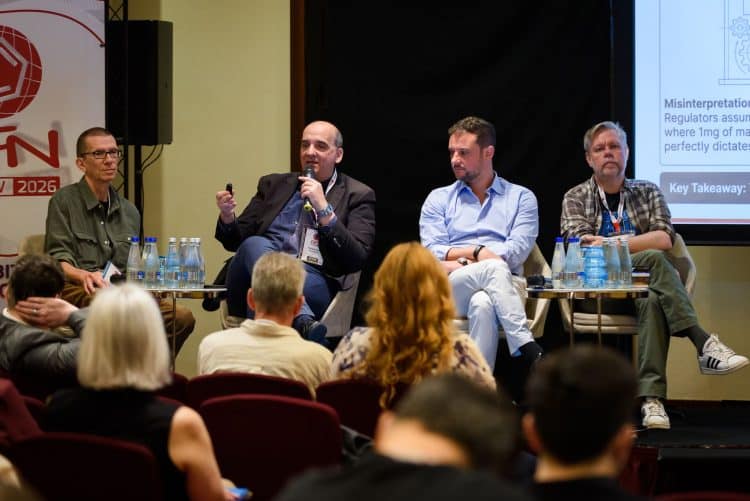
The EU’s third TPD revision was front and centre at the recent Global Forum on Nicotine (GFN) event in Warsaw.
At a panel discussion on the future of EU regulations, consumer advocates, researchers, and industry representatives warned that Brussels risks overlooking one of Europe’s clearest examples of smoking reduction: Sweden.
The concern raised by several speakers was not that nicotine products should remain unregulated. Rather, it was that regulation must distinguish between cigarettes and smoke-free alternatives – and that Sweden’s historically low smoking rate – under five percent – should be treated as evidence, not an exception to be ignored.
Sweden: Europe’s ‘live experiment’
Patrik Strömer, Secretary General of the Association of Swedish Snus Manufacturers, argued that Sweden’s unique position in Europe has created a real-world test case for harm reduction.
When the EU banned snus in 1992, Sweden was not yet a member state. During Sweden’s accession negotiations, the country secured an exemption that allowed Swedish snus to remain legal domestically.
According to Strömer, that exemption has had public-health consequences that should now be central to the EU debate.
“What happened was that we got a live experiment in Europe,” Strömer told the audience.
“What happens with the lung cancer incidence, COPD incidence, smoking-related diseases in a country where snus is allowed, and what happens in all the countries where snus is banned?”
Looking at the data, Sweden had the lowest lung cancer mortality rate of any EU country in 2022. Another study shows that Sweden has both the lowest rate of tobacco-related mortality and the lowest incidence of male lung cancer in Europe.
Strömer’s conclusion was direct: “It’s good for public health if you allow snus. Simple as that.”
For Strömer, the coming TPD3 debate is therefore not only about one product category. It’s about whether EU policymaking will be guided by real-world outcomes or by what he described as “policy-based evidence.”
“It’s not about snus or nicotine anymore,” he said.
“It’s about: are we going to have a rule-based Union where science is the foundation for the policy?”
Nicotine pouches as the next battleground
While tobacco snus remains protected in Sweden, nicotine pouches are in a more uncertain position across Europe. Several countries have already moved to restrict or ban them, while others are considering new rules on flavours, nicotine limits, marketing, and taxation.
For Carissa Düring of the consumer advocacy group Considerate Pouches Sweden, the priority ahead of TPD3 is clear: nicotine pouches must remain legal and accessible.
“My biggest hope is that they are left legal, and that they are not banned or overly taxed,” she said.
Her own story exemplified a generational shift in Sweden.
While tobacco snus has long been associated with Swedish men, nicotine pouches have reached groups who may not see traditional snus as an attractive alternative to smoking.
“I myself represent the generation that started with nicotine pouches instead of tobacco snus,” she said.
“I hate tobacco snus. I’ve tried it several times, I think it’s disgusting, I would never use it.”
She warned that if nicotine pouches were banned or heavily restricted, some users would not simply move to tobacco snus. They might move back to cigarettes.
“For me, the world would end if it were the case that nicotine pouches became banned or restricted in Sweden, because I wouldn’t choose tobacco snus. I would go to cigarettes instead,” she explained.
That argument cuts to the heart of the harm-reduction debate: different smokers and nicotine users do not necessarily respond to the same alternatives. For some, snus may work. For others, vaping or nicotine pouches may be the product that keeps them away from cigarettes.
A call for risk-proportionate regulation
Several speakers argued that the EU’s next nicotine framework should be based on the relative risks of different products.
Tom Gleeson, co-founder of the New Nicotine Alliance Ireland consumer organisation, said nicotine pouches and other novel nicotine products should be included in regulation, but not treated as if they carry the same risks as combustible tobacco.
“The entire suite of nicotine products should be all under one regulation,” he said.
“But that regulation should be based on the continuum of risk.”
That view was echoed by Dr. Konstantinos Farsalinos, who criticised what he sees as a growing gap between scientific evidence and regulatory intent.
“Everything is about regulating risk and using the risk as guidance for regulation,” he said.
“More risk, stricter regulation; less risk, less strict regulation.”
Reflecting on the role of science in TPD2, Farsalinos argued the EU now has far more evidence than it did when the current directive was adopted – but may nevertheless be heading toward more restrictive regulation.
“What we’re seeing today is a complete disconnection between scientific evidence and regulatory intentions,” he said.
He warned that if TPD3 restricts access to products that smokers or former smokers actually use, the result could be counterproductive.
The risk, he said, is “preventing smokers from switching, or even having switchers relapse back to smoking.”
The risk of unintended consequences
The panel also raised concerns that restrictions on flavours, high taxation, and product bans could drive consumers into illicit or unregulated markets.
Ingmar Kurg of the NNA Smokefree Estonia consumer advocacy group described Estonia’s experience with a flavour ban and excise tax. According to him, those policies were followed by a sharp expansion of the black market.
“We had a flavour ban, and later we had an excise tax, and the black market got bigger,” he said.
Gleeson made a similar point from Ireland, where he argued that high taxation has helped strengthen the unregulated market.
“The more they regulate, the more that market goes from gray to charcoal to the black market,” he said.
For the panel, this was not only an economic problem. It was also a public-health and consumer-safety issue.
If legal products become too expensive, unattractive, or difficult to access, demand does not necessarily disappear. It may simply move outside regulated channels.
Will Brussels look north?
The central question ahead of TPD3 is therefore whether the EU will use Sweden’s experience as a guide – or treat it as an outlier.
Sweden’s low smoking rate, long history of snus use, and rapid uptake of nicotine pouches give the country a distinctive place in Europe’s nicotine landscape.
For advocates of harm reduction, that makes Sweden not a special case to be dismissed, but a model to be studied.
Strömer summed up the concern from a Swedish and European perspective.
“From a pure Swedish perspective, I’m quite calm and carrying on,” he said.
“From a European perspective, I’m deeply worried.”