Alex Wodak: ‘The safer nicotine option should be the easier option’
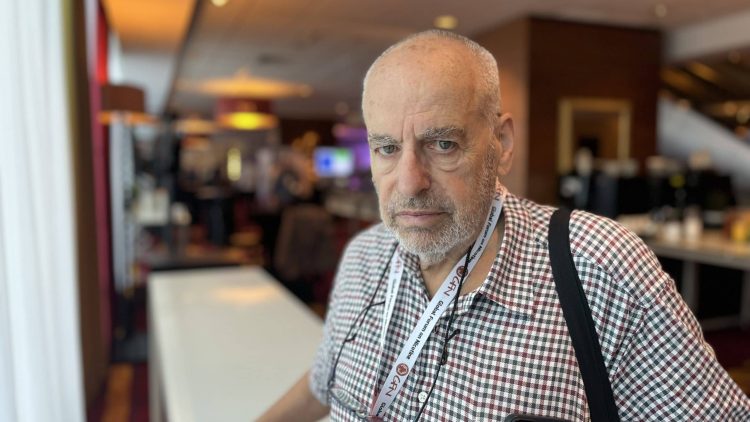
In this instalment of our Harm Reduction Heroes series, Snusforumet talks to Dr. Alex Wodak, the Australian physician who helped pioneer needle and syringe programmes during the HIV crisis and has spent decades arguing for a pragmatic approach to drugs, tobacco and nicotine.
One of the moments that shaped Alex Wodak’s career came in 1971, during his first year as a doctor.
A hospital where he worked was being rebuilt. The plans had been drawn up before seatbelt legislation took effect, but by the time construction was underway, road-crash injuries had fallen sharply.
Beds once expected to be occupied by accident victims could instead be used for cancer, heart disease and other conditions.
“I was staggered by the thought that such a huge benefit could accrue from a fairly modest harm reduction intervention,” he recalls.
The lesson stayed with him: public health could reduce harm without eliminating the behaviour itself.
Civil disobedience in an HIV epicentre
A decade later, that principle became urgent.
In 1982, Wodak began working at St Vincent’s Hospital in Sydney, close to communities hit early and hard by HIV. He and colleagues feared that the virus could spread rapidly among people who injected drugs and then into the wider population.
“I was obsessed with averting the catastrophe that I could see unraveling, unless something was done quickly,” he says.
Their response was practical: sterile injecting equipment, expanded methadone treatment, peer-led education and organisations involving people who used drugs themselves.
But authorities repeatedly declined or ignored Wodak’s requests to establish a needle and syringe programme. After 13 submissions, he and colleagues decided to act.
“We had to resort to civil disobedience,” he says.
On 12 November 1986, they put a notice on the door offering free needles and syringes and paid for the equipment themselves.
Police later interviewed him, but no charges followed. The episode also changed the way Wodak understood resistance to harm reduction.
“A light bulb went off in my head, and I realised that this was really a battle about prohibition,” he says.
That insight would shape the rest of his career, including his role as foundation president of what is now Harm Reduction International.
When harm reduction met tobacco
In 1992, Wodak chaired the programme committee for an international harm reduction conference in Melbourne. One of the questions was whether the same approach could apply to tobacco.
British nicotine researcher Michael Russell was invited to speak, convincing Wodak that harm reduction could apply to smoking too. At the time, however, the alternatives to cigarettes were limited.
“The safer option should be the easier option,” he recalls thinking.
“We should be encouraging people to switch from high-risk to low-risk options.”
Australia, in his view, has done the opposite.
Australia’s prohibition experiment
Australia has adopted one of the world’s most restrictive approaches to alternative nicotine products.
Since July 2024, vapes can legally be supplied only through participating pharmacies for smoking cessation or managing nicotine dependence. Snus and other oral smokeless tobacco products are also prohibited from commercial supply.
Meanwhile, cigarettes remain widely available – a mismatch Wodak argues has pushed consumers towards an illicit market rather than eliminating demand.
In June 2026, the Australian Bureau of Statistics estimated that around 80 percent of the nicotine consumed in Australia in 2025 came from illicit sources.
“What Australia has done is make itself a poster case for other governments around the world to see what happens when extremism is carried out,” he says.
That is especially frustrating, he adds, because Australia has long had a reputation for pragmatic public health.
“This is an area of glaring underperformance,” he says.
Sweden, snus, and substitution
Sweden, in contrast, offers a very different example, according to Wodak.
The country has a long history of snus use and the exceptionally low smoking prevalence, becoming the first EU country to fall below the five-percent “smoke-free” threshold. For Wodak, it shows what can happen when nicotine use shifts away from combustion.
“In my view, the Swedish experience is only open to one interpretation,” he says.
The key distinction, he argues, is not simply between nicotine and no nicotine, but between different ways of consuming it and their very different health risks.
Wodak also points to Japan, where cigarette sales fell sharply following the arrival of heated tobacco products, and New Zealand, where smoking rates declined after vaping became more accessible.
For him, the lesson is consistent: make lower-risk alternatives accessible and easier to obtain than cigarettes.
‘You have to tell young people the truth’
One objection Wodak encounters frequently is that tobacco harm reduction is simply an industry narrative. His response is direct.
“Nonsense,” he says.
His own interest in tobacco harm reduction dates to 1992, before today’s market for vaping, heated tobacco and nicotine pouches existed.
At the same time, he makes no attempt to excuse the tobacco industry’s history.
“It’s not a checkered past. It’s a reprehensible past,” he says.
“But that’s the past. We can’t change the past. We can change the future.”
For Wodak, public health risks losing credibility when distrust of an industry becomes more important than what happens to people who continue to smoke.
Youth nicotine use is often the point at which tobacco harm reduction debates harden into calls for prohibition.
Wodak agrees that young people shouldn’t use nicotine. What troubles him is the temptation to exaggerate risks in an effort to discourage them.
“You have to tell young people the truth,” he says.
But he believes protecting young people should not mean losing sight of those facing the greatest immediate risk.
“The people who are most at risk of getting a serious or even a terminal illness [are] the middle-aged and older smokers,” he says.
“They’re the ones we should be, first and foremost, trying to encourage to switch to safer methods.”
A message to Europe
Asked what he would tell European policymakers considering future tobacco and nicotine regulation, Wodak returns to his years as a doctor.
“I would say to them that they should speak to people who have smoking-related terminal conditions,” he says.
He repeatedly had to tell patients they had cancer or another serious illness and that medicine could no longer offer a cure.
“It’s a pretty awful experience saying that to somebody,” he says.
Those conversations, he adds, made him more determined to “press harder on prevention.”
Wodak offers the playground as an everyday analogy.
When he was a child, he recalls, the ground beneath swings and slides was often concrete. Today it is soft. Children still fall, but they are less likely to break an arm or leg.
For Wodak, tobacco policy should work the same way: accept reality and reduce the consequences rather than assume risky behaviour can simply be prohibited away.
“We have to be realistic,” he says.
After more than five decades in public health, Wodak’s argument comes back to the same principle: “sensible, pragmatic ways of averting terrible health outcomes.”