Sweden’s political deadlock leaves EU nicotine tax plans in limbo
The EU has already postponed a crucial decision on new tobacco and nicotine taxes as Sweden struggles to form a government. With no end to Sweden’s political deadlock in sight and the clock ticking toward the end of the Irish presidency, the future of EU nicotine taxes hangs in the balance.
Friday, October 9th was supposed to be the day EU finance ministers voted on new minimum taxes for tobacco and nicotine products, including nicotine pouches.
Instead, leaders of four Swedish political parties met outside Stockholm to see if they could hammer out a shared vision for the country almost four weeks after Swedes went to the polls.
On Tuesday, October 13th, Social Democrat leader Magdalena Andersson announced those efforts had failed.
“My overall assessment is that progress has been made, but at the same time, the conditions are currently not in place to form a government that can be tolerated by the parliament,” Andersson said at the time.
Two days later, Swedish MPs voted against her becoming Sweden’s next prime minister.
“We have a challenging situation in parliament,” Andersson told broadcaster SVT following the vote.
“Several votes will be needed before we have a new government in place.”
The rejection, while expected, prolongs Sweden’s post-election political stalemate and adds to uncertainty adds to uncertainty about the fate of the EU nicotine tax overhaul.
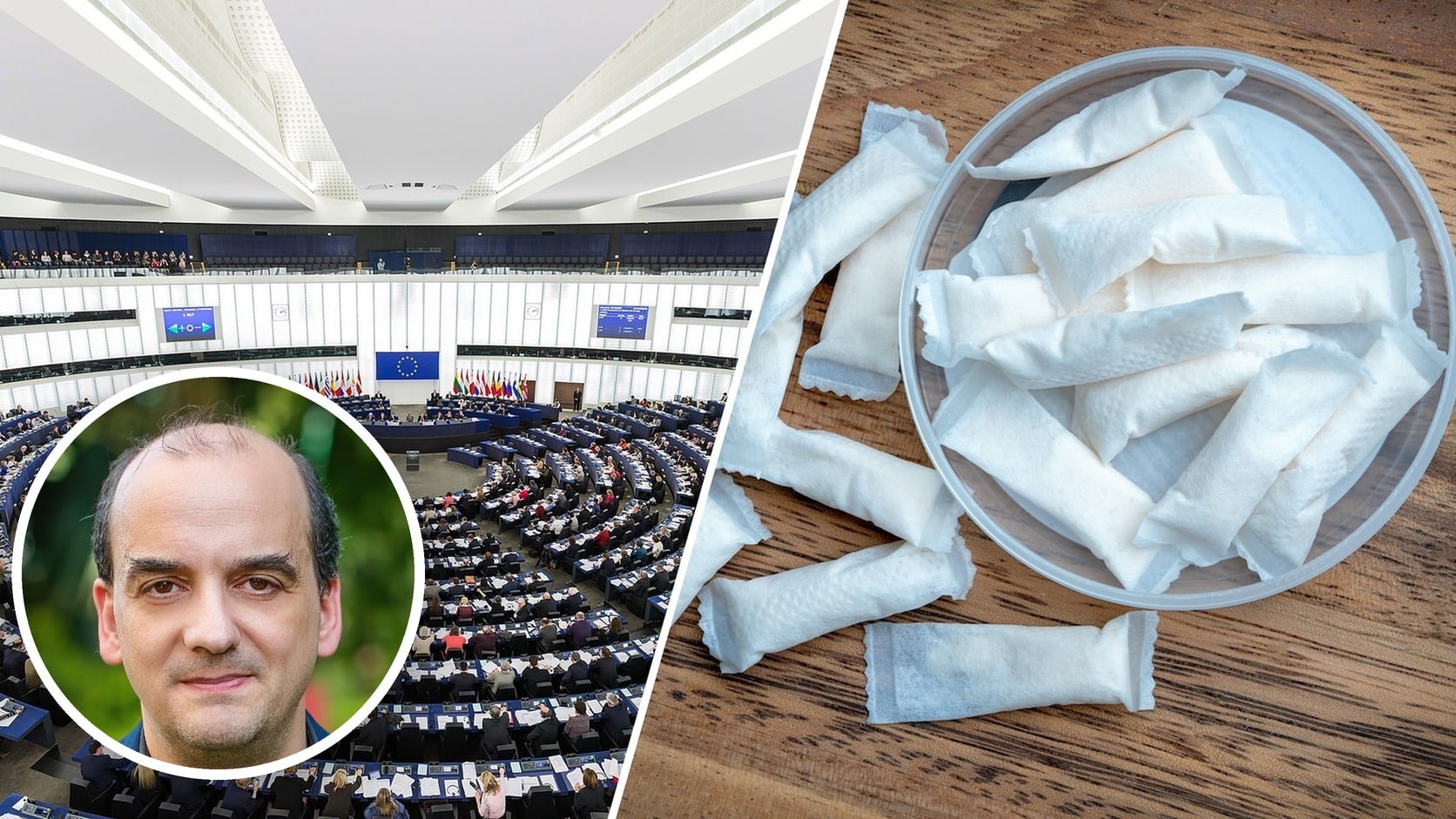
“Everyone expected a close election, but I’m not sure everyone anticipated the potential consequences for EU nicotine policy,” says Patrik Strömer, Secretary General of the Association of Swedish Snus Manufacturers.
Just before the election, the finance ministers’ vote on the revised Tobacco Excise Directive (TED) was pushed to November, Politico reported, ostensibly to give Sweden time to form a new government. The Irish presidency, which is steering the talks, wants a unanimous political agreement at the November meeting of finance ministers.
But more than 30 days after the polls closed, Sweden still has no new government in place, further complicating the timeline for a decision about how the EU will tax nicotine products in the future.
Sweden’s left-right split
The election gave the Social Democrats, the Left Party, the Greens and the Centre Party a combined 176 seats in the Riksdag, Sweden’s parliament, compared with 173 for the right-wing parties.
However, that numerical majority has yet to translate into a viable governing coalition. In particular, the Centre Party and the Left Party remain far apart over the shape of a potential new government.
The Left Party wants ministerial posts rather than simply approving a government led by Social Democrat leader Magdalena Andersson. The Centre Party, led by Elisabeth Thand Ringqvist, has said it will not accept Left Party ministers in government. The Centre Party has also ruled out cooperation with the far-right Sweden Democrats.
Sweden’s previous three-party minority government, led by outgoing Prime Minister Ulf Kristersson, relied heavily on support from Sweden Democrats to pass its legislative agenda.
Kristersson tendered his resignation on September 17th. Since then, Sweden has been governed by a caretaker administration.
The October 9th meeting was Thand Ringqvist’s initiative. But she has insisted her red lines still stand, and that the parties remain “very far apart” and announced the morning of the October 15th vote that her party would vote against Andersson as Sweden’s next PM.
Since 1990, Sweden has usually needed less than three weeks to form a new government. In 2002 and 2022, the process took just over a month.
The current deadlock is longer than most, but still well short of the 134 days needed following the 2018 election.
Sweden’s opposition to higher EU nicotine taxes
Sweden’s political uncertainty matters to Brussels because the country has emerged as one of the strongest opponents of key elements of the proposed TED revisions.
The European Commission’s current proposal would, for the first time, bring tobacco-free nicotine pouches within the scope of the directive.
Sweden has expressed support for harmonising certain tax rules in principle, but has opposed EU-wide minimum tax requirements that would undermine individual countries’ ability to tax nicotine products according to their relative health risks.
The outgoing Swedish government’s official position has been unequivocal.
In a formal statement on the Commission’s proposal, the government described it as “unacceptable” for the EU to require nicotine pouches to be taxed at the same level as certain forms of smoking tobacco.
In June, Sweden blocked a proposed TED revision that called for nicotine pouches to be taxed at approximately SEK 1,045 per kilogram – more than double the current rate for tobacco snus.
Countries that wish to differentiate taxation based on the relative harmfulness of products, the government argued, must remain free to do so.
This distinction is central to Sweden’s approach to tobacco harm reduction. Rather than treating all nicotine products as equally harmful, Swedish policy has increasingly recognised the differences between combustible cigarettes and smoke-free alternatives such as snus and nicotine pouches.
Because EU tax legislation requires unanimity among member states, Sweden’s opposition carries considerable weight.
New government, new stance on EU nicotine tax?
The current political uncertainty in Sweden creates two levels of uncertainty for policymakers in Brussels and Ireland, which holds the rotating EU presidency until the end of 2026.
The longer it takes for Sweden’s new government to take office, the higher the risk that the already postponed finance ministers’ vote gets pushed back further.
“The November date may have looked smart back in September, but it still may be too soon,” says Strömer.
With only a handful of weeks between the November date and the end of the Irish presidency, the vote may not happen until 2027 when Lithuania takes over the presidency.
“Lithuania may not be as firmly pro tobacco harm reduction as Sweden, but there may be more room for compromise,” says Strömer.
Furthermore, it’s unclear exactly what an Andersson-led government’s position on the question might be.
The Social Democrats have previously opposed letting Brussels set Swedish pouch taxes on the grounds that Sweden should decide its own taxes. More recently, however, support for harm-based taxation has grown within the party.
A minority government dependent on three other parties may find it easier to abstain than to cast a veto. And under EU rules, abstaining is not the same as blocking: an abstention would allow the directive to pass.
“For Swedish pouch users, the question is no longer only what Sweden’s next government thinks about the tax, but whether it is prepared to say so in Brussels,” warns Strömer.