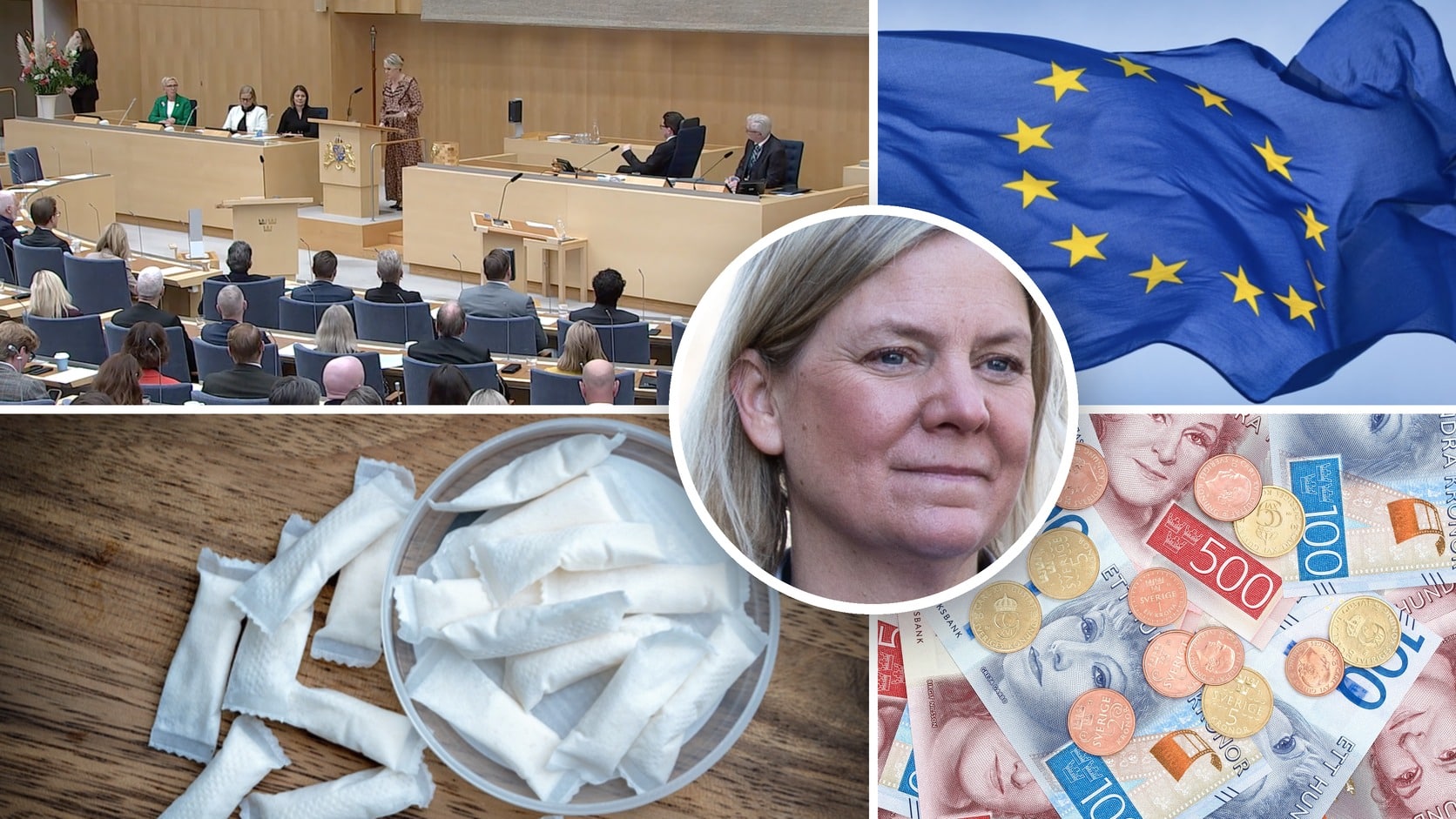
Eight EU countries demand nicotine ‘market freeze’
Eight EU countries want Brussels to impose a “market freeze” on new nicotine products, tighten restrictions on those already on sale, and allow national bans on nicotine pouches.
The demands come in a joint letter to Health Commissioner Olivér Várhelyi, dated 6 October and published by the Dutch government.
It was sent by Dutch Health Minister Sophie Hermans on behalf of her counterparts in Belgium, Finland, France, Hungary, Latvia, Slovenia, and Spain.
“The letter and the demands are outrageous,” says Patrik Strömer, Secretary General of the Association of Swedish Snus Manufacturers.
“It jettisons some of the fundamental principles of the common market – not to mention common sense.”
In the letter, the eight set out what they expect from the Commission’s revision of the Tobacco Products Directive (TPD) and Tobacco Advertising Directive (TAD). The Commission is expected to present its proposal by the end of 2026.
“The Member States call for an end of the nicotine industry’s ability to continuously introduce new nicotine-containing products onto the European market,” the letter reads.
But the proposals go beyond the EU’s existing ambition for a smoke-free generation by 2040.
The ministers say the revised legislation should ultimately aim at “phasing out nicotine dependence across the European Union”.
“That is a fundamental shift in objective,” says Strömer.
“The question is no longer simply how Europe reduces the death and disease caused by smoking, but whether nicotine use itself is something policymakers intend to eliminate.”
A freeze on new products
The letter’s central demand is a “market freeze” aimed at preventing any new product containing nicotine, or a substance with “nicotine-like properties”, from entering the European market.
The proposed freeze would not stop at nicotine.
“This should also cover products that contain neither nicotine nor nicotine-like substance but resemble products that do,” the ministers write.
They suggest the freeze could be achieved by banning products containing nicotine that are not regulated under the TPD from being sold “as consumer products”.
Nicotine pouches currently fall outside the directive.
The letter does not spell out exactly how existing products outside the TPD would be treated under such a regime.
Writing to the Dutch parliament, Hermans said the aim was to stop young people becoming addicted to “the vapes of the future”, according to Dutch news outlet Reformatorisch Dagblad.
Tighter rules for existing products
For products that remain on the market, the eight health ministers call for:
- strict maximum nicotine levels and a broad flavour ban for all products
- standardised products and devices, as well as plain packaging for all products
- advertising bans across every channel, including influencers, with social media platforms required to prevent such content from being uploaded
- an end to cross-border distance sales within the EU
- room for national bans on environmental grounds, including bans on single-use e-cigarettes
All products allowed on the market should be regulated to the same extent, the ministers argue. Otherwise, they say, consumers will simply switch between categories.
Pouches a ‘circumvention’ of EU snus ban?
The letter singles out nicotine pouches in particular, describing them as “strikingly similar to oral tobacco”, which has been banned in the EU since 1992 everywhere except Sweden.
It argues that nicotine pouches “can be seen as a circumvention” of that ban.
The ministers also describe pouches as “highly harmful and addictive” and reject claims linking them to smoking cessation as unfounded. They want the existing oral tobacco ban reinforced and member states given the freedom to ban nicotine pouches entirely.
For Strömer, one of the most striking features of the letter is the limited distinction it makes between products according to their relative risks.
“For a smoker, the relevant comparison isn’t between nicotine and no nicotine,” he says.
“It is often between continuing to smoke and switching to a non-combustible product. A policy that ignores that distinction risks losing sight of the public-health objective.”
The Netherlands, France, and Belgium have already banned nicotine pouches. Sweden has objected to such bans through the EU’s TRIS notification procedure.
In its 2023 comments on the Dutch ban, Sweden argued for more proportionate measures, such as regulated sales.
It has since challenged Austria’s restrictions and contested France’s defence of its ban.
From twelve to eight
This is not the first time the Netherlands has rallied health ministers ahead of the TPD revision.
In March 2025, a similar letter reported by Euronews carried the support of eleven other countries – twelve including the Netherlands.
Estonia, Ireland, Lithuania, Luxembourg, and Malta have not signed this time. Hungary – Várhelyi’s home country – has joined.
The two letters are not identical, and a missing signature does not necessarily signal disagreement with the Dutch initiative.
Nevertheless, the coalition has become smaller rather than larger: eight governments have signed the October letter, compared with twelve behind the Dutch-led initiative in March 2025.
Strömer sees that as noteworthy.
“I’m not sure I’d go as far as calling it a silver lining, but it’s nice to know the Dutch have failed to convince more member states to sign on to their misguided drive to implement prohibitionist policies,” he says.
He also points to the contrast between smoking rates in the countries behind the letter and Sweden.
Comparable WHO data from 2022 show daily smoking rates above 20 percent in five of the eight signatory countries, compared with 8 percent in Sweden in the same dataset. More recent Swedish figures indicate that daily smoking has since fallen further.
According to the most recent domestic data, Sweden is now the first EU country to meet the WHO’s smoke-free threshold of daily smoking prevalence below five percent.
Sweden is also the only EU member state where snus can legally be sold.
“These are countries that still have a much bigger smoking problem than Sweden,” Strömer says.
“Yet their answer is to make it harder to access alternatives to cigarettes. That is the contradiction Brussels needs to think very carefully about.”