Nicorette maker backs EU Parliament event that shuts out rival nicotine sellers
Nicorette maker Kenvue and a group that previously rewrote an EU report favourable findings on snus are behind a European Parliament event promising to “debunk” the Swedish Experience of tobacco harm reduction. Anyone linked to the tobacco and vaping industry is banned from attending.
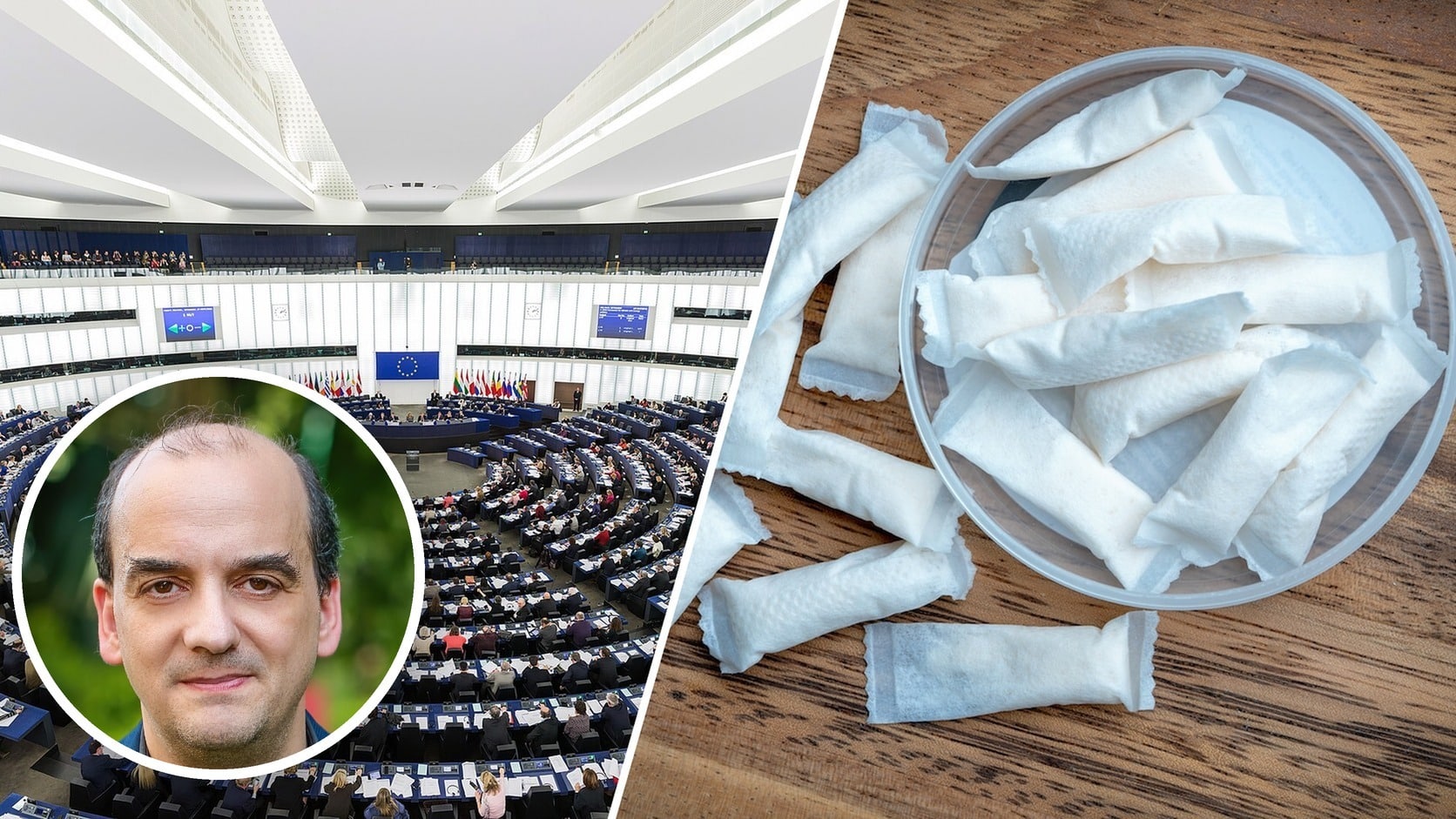
On the morning of 17 November, MEPs, researchers and public health campaigners will gather in the European Parliament in Brussels for a 90-minute event titled “The Science behind Recreational Nicotine Products”.
But not everyone is welcome.
Citing Article 5.3 of the WHO Framework Convention on Tobacco Control (FCTC), organisers state that tobacco and vaping industry representatives may not attend.
“It’s like having a seminar on road safety that bars people from Volvo and Ford from attending because their products can cause harm,” says Patrik Strömer, Secretary General of the Association of Swedish Snus Manufacturers.
However, another company that sells nicotine is not only welcome but listed as a partner: Kenvue, the consumer health company behind Nicorette that was recently acquired by consumer health giant Kimberly-Clark.
Nicorette maker Kenvue’s stake in the debate
Nicotine replacement therapy competes for the same customers as snus and nicotine pouches: smokers who want to quit cigarettes.
“Kenvue’s interest is of course that smokers choose nicotine gum, and they’re entitled to that interest,” Strömer says.
“But the difference between smoking and using other nicotine products is enormous, whether you compare it with nicotine pouches or gum. Yet companies offering the former aren’t allowed to be a part of the conversation.”
The event’s title also draws a convenient line between “recreational” nicotine products and the “medicinal” nicotine that Nicorette sells.
“There seems to be a blatant double standard when it comes to who gets to participate in discussions about nicotine. Apparently some companies that sell nicotine are more equal than others,” Strömer adds.
The event is framed around the revision of the EU’s Tobacco Products Directive (TPD), which the European Commission is expected to present in the fourth quarter of 2026.
Swedish taxpayers funding anti-Sweden ‘propaganda’
The programme includes a session entitled “Beyond Snus: Debunking the Swedish Model to Protect Europe’s Youth”.
This “Swedish Model” is more commonly known as the “Swedish Experience”, referring to Sweden having much lower instances of tobacco-related diseases and mortality despite having tobacco and nicotine consumption levels roughly on par with other countries in Europe.
Sweden also has the EU’s lowest smoking rate, with less than 5 percent lighting up daily.
“As of yet, no one has put forth another explanation for Sweden’s lower rate of tobacco-related disease and daily smoking than access to less harmful alternatives like snus,” Strömer argues.
The session features Helen Stjerna, Secretary General of the Swedish organisation A Non Smoking Generation, which receives 1.8 million kronor in government grants in 2026 via Sweden’s Public Health Agency (Folkhälsomyndigheten).
That’s part of 6 million kronor the agency distributed this year to tobacco-prevention organisations. Together with the 2 million kronor awarded to Tobaksfakta, a think tank of which A Non Smoking Generation is a member organisation, the two account for nearly two-thirds of the total.
“It’s a bit ironic that Swedish taxpayers indirectly fund the salary of someone working in the name of public health who then travels to Brussels with the express aim of casting doubt on one of Sweden’s greatest public health successes,” Strömer points out.
ENSP’s long fight against snus
The event’s other partner – ENSP – has crossed paths with snus before.
In 2003, the European Commission asked ENSP for a report on oral tobacco. ENSP contracted Dutch consultancy Research voor Beleid, whose draft concluded that the EU’s snus ban should be lifted.
But the published version reached the opposite conclusion after a passage crediting snus for Sweden’s low smoking rates was toned down. Sweden’s tobacco-control policies were then inserted as part of the explanation.
In 2012, Swedish tabloid Aftonbladet reported that a remaining positive statement about snus in the Swedish context had even been painted over with Tipp-Ex before publication.
Adviser and campaigner
ENSP’s role in shaping EU nicotine policy has also drawn scrutiny.
In January 2023, the Commission’s health agency HaDEA awarded a framework contract to support EU tobacco-control policy. The contract was worth around €3 million and went to a consortium led by the consultancy Open Evidence, with ENSP and the University of Crete as partners.
Swedish MEP Sara Skyttedal asked the Commission whether ENSP’s involvement risked a conflict of interest. The Commission replied that ENSP had signed a declaration that it had no conflict of interest.
After a complaint from the industry body Tobacco Europe, the European Ombudsman closed the case in February 2025, finding that no further inquiries were justified. The Ombudsman nonetheless called it “regrettable” that the Commission had not acknowledged ENSP’s interest in tobacco control.
Back to the future?
Two decades after the rewritten snus report, ENSP is once again lending its name to an effort to question the role of snus and nicotine pouches in Sweden’s low smoking rates.
“I’m not surprised that ENSP is involved again after all these years, but it’s unfortunate to see their propaganda given a platform in the European Parliament under the guise of a conversation about science,” says Strömer.
The Commission is expected to present its TPD3 proposal before the end of the year, opening negotiations among member states and in the European Parliament in 2027.
Nicotine pouches, which fall outside the current directive, are likely to be regulated at EU level for the first time – and several member states have already banned them.
For Sweden, the stakes go beyond the snus exemption written into its 1995 accession treaty. The question is whether the Swedish Experience will be treated in Brussels as evidence to learn from, or as a model to be “debunked”.