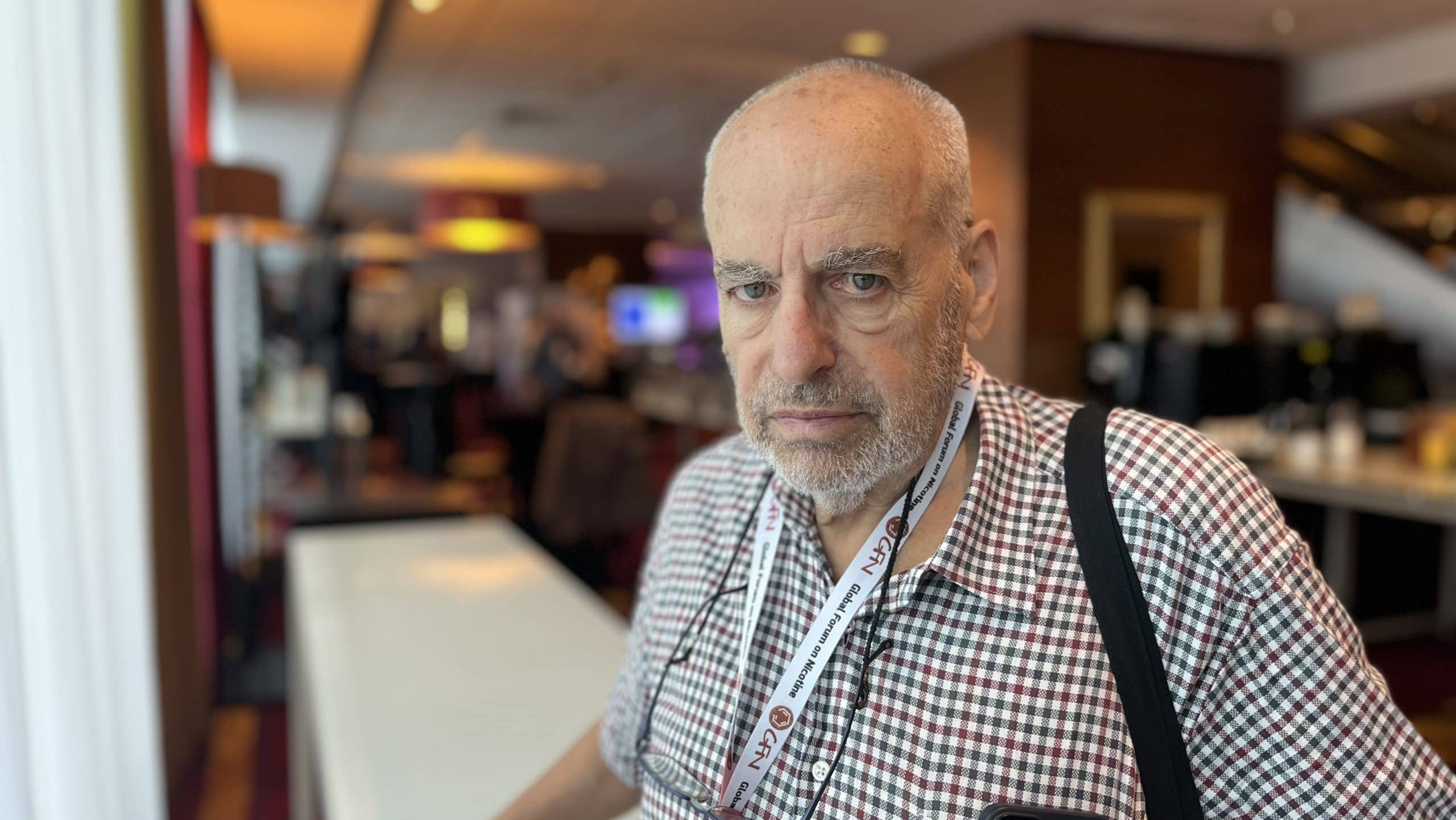
Mark Tyndall: The harm reduction doctor who took on tobacco’s last taboo
In this instalment of our Harm Reduction Heroes series, Snusforumet talks to Mark Tyndall, the Canadian infectious-disease physician who helped pioneer pragmatic responses to HIV and overdoses – and who now argues that the world’s refusal to embrace safer nicotine is a public-health failure hiding in plain sight.
In public health, it’s easy to forget the people who are already inside the burning building.
That, Mark Tyndall believes, is the mistake tobacco control has made. For decades, he watched harm reduction save lives by meeting people where they actually were – sex workers who couldn’t negotiate abstinence, drug users exposed to HIV, opioid users facing fentanyl poisoning. In those settings, the goal was never to moralise over “bad choices.” It was to prevent avoidable deaths.
So when Tyndall began advocating for safer nicotine, he assumed the logic would translate. Cigarettes kill. Smoke-free alternatives are vastly less harmful. Give smokers something that helps them step down the risk ladder.
Instead, he ran into an old enemy wearing a new uniform: moral certainty.
“I couldn’t believe it,” Mark Tyndall says of the early pushback he got when he started talking publicly about vaping.
“It’s still just so simple in my mind that people are dying of this and we have something else to offer them. Not doing so is totally unethical.”
From HIV to harm reduction
Tyndall started medical school in 1982, when HIV was still emerging as a lethal mystery. His first clinic involved haemophiliacs dying of an unknown disease. Then it appeared among gay men.
His career, he says, was shaped by the feeling that medicine was failing in real time.
In the 1990s, infectious diseases took him to Nairobi, where he worked on HIV prevention with painfully limited tools.
“The harm reduction idea really was condoms. That was basically all we had to offer,” he recalls.
Even that provoked fierce resistance, on the grounds that providing condoms would encourage promiscuity – an argument that echoes in today’s debates about vaping and other safer nicotine products. “People somehow had a problem with people using condoms and having sex without any consequences. It was absolutely ridiculous. Yet the consequences of unprotected sex was HIV, which meant death.”
There was probably five years of pushback against condoms. Just think how many millions of unnecessary deaths happened as a result?
From needle exchange to safer nicotine
By 1999, Tyndall had moved to Vancouver, where HIV was spreading among people who injected drugs. The Downtown Eastside – a dense pocket of poverty, homelessness, and drug use – became a testing ground for harm reduction in North America.
Tyndall evaluated Vancouver’s needle exchange and helped build the evidence base around Insite, the first supervised injection site in North America, which opened in 2003.
Harm reduction, in those years, wasn’t a slogan. It was a series of practical questions: What reduces disease transmission? What reduces overdose? What keeps a person alive long enough to have another chance?
A matter of life and death – again
Tyndall’s shift towards tobacco harm reduction began almost accidentally. While running a cohort study in Ottawa involving people living with HIV or at high risk, he noticed something unexpected.
“There were no HIV deaths,” he says. Instead, year after year, the same conditions kept appearing: cardiac disease, COPD, lung cancer.
“They all smoked,” Mark Tyndall says.
In 2011, he offered people in the cohort vaping products.
“They liked it,” he adds.
He wrote an op-ed describing vaping as a kind of cure for cigarettes – nicotine delivery without combustion.
He expected enthusiasm. Instead, he encountered resistance.
“If you had told me that 14 years later we’d be in this mess and facing continued pushback from safer products, I wouldn’t have believed it,” he says.
‘The goalposts moved to nicotine’
For Tyndall, the frustration lies in how familiar the pattern feels.
Initially, tobacco control focused on the devastation caused by combustible smoking. But as evidence accumulated that vaping and oral nicotine products were far less harmful, he noticed the argument shift.
“The tobacco control people have moved the goalposts,” he says.
“Their aim is now the elimination of combustible tobacco and nicotine.”
When the alternative could no longer be credibly framed as just as dangerous, nicotine use itself became the problem.
Tyndall channelled his frustration by writing a book. Released in 2025, Vaping: Behind the Smoke and Fears, traces the rise of vaping and the consequences of the moral panic that ensued. Part of his motivation in writing the book was to drive home the point that “nicotine isn’t the problem”.
He of course acknowledges that nicotine can be addictive. But he questions whether addiction, in isolation, constitutes a public-health emergency when it isn’t paired with catastrophic harm.
“Nicotine is actually a pretty stable addiction,” he explains.
“If you start off smoking a pack a day, you don’t automatically jump to eight packs a day.”
He adds that nicotine dependence doesn’t lead to the spirals people associate with addiction – financial collapse, broken relationships, escalating use.
“It just doesn’t work that way,” he says, comparing it instead to caffeine.
The puritan instinct
If Tyndall has a unifying explanation for why harm reduction repeatedly triggers backlash – whether around condoms, opioids, or nicotine – it’s discomfort with the idea that people might get pleasure without punishment.
He sees it in the way critics fixate on nicotine’s dopamine hit, as if “it feels good” disqualifies it as an intervention.
That really is at the core of it. Why should we give people a pleasurable substance without any consequences?
Tyndall is careful not to romanticise nicotine or encourage youth use. He’s a father who doesn’t want his son to start. But he believes claims that nicotine “damages young brains” are often exaggerated and rooted in weak evidence.
“It all comes from studies on mice that received megadoes of nicotine,” Mark Tyndall says.
“And it’s really hard to interpret what a mouse is doing when it’s given really heavy things or displays weird behaviour in a cage. It really has nothing to do with kids.”
Sweden, snus, and cultural reality
A recent visit to Stockholm reinforced his view that widespread nicotine use and low smoking prevalence can coexist.
“It just showed that you can have quite a successful society when a proportion of people are using nicotine,” he says.
But he’s clear that the Swedish experience isn’t something to copy-paste.
“Each country will probably have to find its own way based on the culture and the history,” he says.
In Canada, vaping may offer a more natural off-ramp from cigarettes than snus, because it more closely mimics the behavioural and social aspects of smoking. The lesson, he argues, isn’t that every country should become Sweden overnight – but that harm reduction works when societies allow it to.
The free intervention nobody wants
What frustrates Tyndall most is that tobacco harm reduction doesn’t require massive public spending.
“This intervention is free,” he says. “Industry will do it and consumers will do it. We don’t need some huge new public health investment. We just need to tell people the truth and most will march right into it.”
Instead, he sees institutional inertia – political, professional, and financial.
“There’s so much vested interest in the way it is now,” he says.
Then he returns to the clinician’s ethic that underpins his argument.
“If you have somebody in front of you who is smoking cigarettes and you’re not offering them a safer product,” Mark Tyndall says, “to me it’s like not offering them… treatment.”
Current smokers as collateral damage
Tyndall believes public health has relied too heavily on repetition – telling people to quit as if insistence were a treatment plan – while accepting the early deaths of those who don’t or can’t quit.
“The 3.5 million Canadians who currently smoke are just collateral damage,” he says.
“The sooner current smokers die, the thinking goes, the better off we’ll be because we’ll get our prevalence down. Like we can get to zero once everybody dies. And to me that’s not really a good plan.”
Despite growing real-world evidence supporting tobacco harm reduction, Tyndall isn’t optimistic that entrenched opposition will dissolve soon.
“The anti-tobacco people have dug in so deep and came out so early against safer nicotine products, they’re simply not going to change,” he says.
Still, his prescription remains the same one he learned in the early years of HIV: tell the truth about risk, offer what works, and refuse to confuse morality with medicine.
“I think we can continue to disincentivise combustible tobacco and continue to give people options,” he says.
“Our goal should be to get people off combustible cigarettes. Period.”