2025 in review: Sweden’s policy works, now the EU must listen
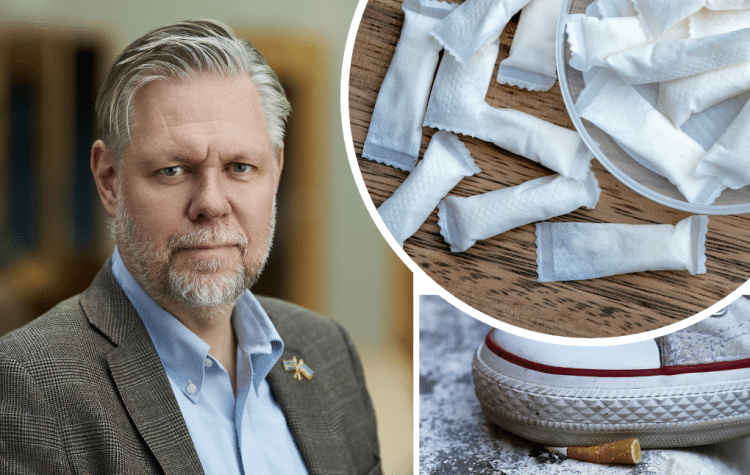
Looking back, Patrik Strömer sees 2025 as one of the most confusing years in recent memory. But the Secretary General of the Association of Swedish Snus Manufacturers believes it’s clearer than ever that Sweden’s policy approach of focusing on harm reduction has led to exactly that – reduced harm.
EU proposals for sharply increased nicotine taxes, internal processes ahead of COP11, and a growing international understanding of harm reduction set the tone for the debate in 2025.
Looking back on the year, Strömer highlights two developments as particularly decisive: the European Commission’s attempts both to take over taxation powers for nicotine products and significantly raise taxes on nicotine pouches, as well as officials ahead of COP11 pushing a line that would have, in practice, amounted to a ban.
Despite the hurdles, he believes that Sweden still has a central role to play in the EU’s nicotine policy, even though that role has yet to be fully utilised.
“Sweden can and should do much more to put a stop to all the nonsense and make it clear what actually works,” he says.
Research progressing, but myths persist
New research on nicotine has challenged old beliefs during the year. Strömer notes that the perception of nicotine as a uniquely harmful substance is fading.
“More research on nicotine would be great, but it’s far more important that responsible authorities and organisations are clear about just how big the difference in health effects is between smoking and snus,” he says.
The real problem, he believes, is the lack of communication about the difference between smoking and smoke-free alternatives, something that continues to cost lives around the world.
“Internationally, we see that half of all smokers still believe that it’s more dangerous to snus or vape than to continue smoking,” he explains.
“Where did they get that idea?”
Myths also continue to shape the political debate. One of the most persistent is the claim that snus is a gateway to smoking.
“There are still too many people who believe something that is so obviously false if you look at the numbers,” he says.
When evidence clashes with ideology
For Strömer, 2025 continues to show that political decisions all too often disregard research.
“It seems that most of it is ideologically driven, which in practice means smokers remaining restricted to cigarettes,” he explains.
He describes the denial by public health bodies in Sweden that snus plays an important role in shaping the development of Swedish public health as “as far from science as you can get”.
At the same time, more fact-based discussions are emerging in certain contexts, not least at the Almedalen political gathering held every summer on the Baltic island of Gotland, where the level of knowledge has clearly improved.
“Within a smaller circle, there is definitely greater understanding, and the conversations are far more factual and well-founded than in the broader public debate,” says Störmer.
Strömer’s wish list for the future
With new national bans in France and Spain, political polarisation within the EU is intensifying. For Strömer, the message is simple:
“It’s simply tragic that France is voluntarily throwing away something that could reduce smoking,” he laments.
He hopes 2026 leads to genuine harmonisation at the EU level and that reasonable regulation of smoke-free products is finally agreed upon
Beyond that, his wish list is short and clear:
“I wish that all countries where cigarettes are allowed would also allow snus and nicotine pouches,” he says.
And in addition, a more factual information environment that tones down moral panic and ensures people are not misled.